It all started with a simple relocation. I needed to reposition my MikroTik RouterBOARD to make room for a DAS (Direct Attached Storage) that was on its way. Simple operation: disconnect the fiber, move the equipment, reconnect. Except when I removed the cable, the SC/APC connector ferrule got stuck inside the GBIC module.
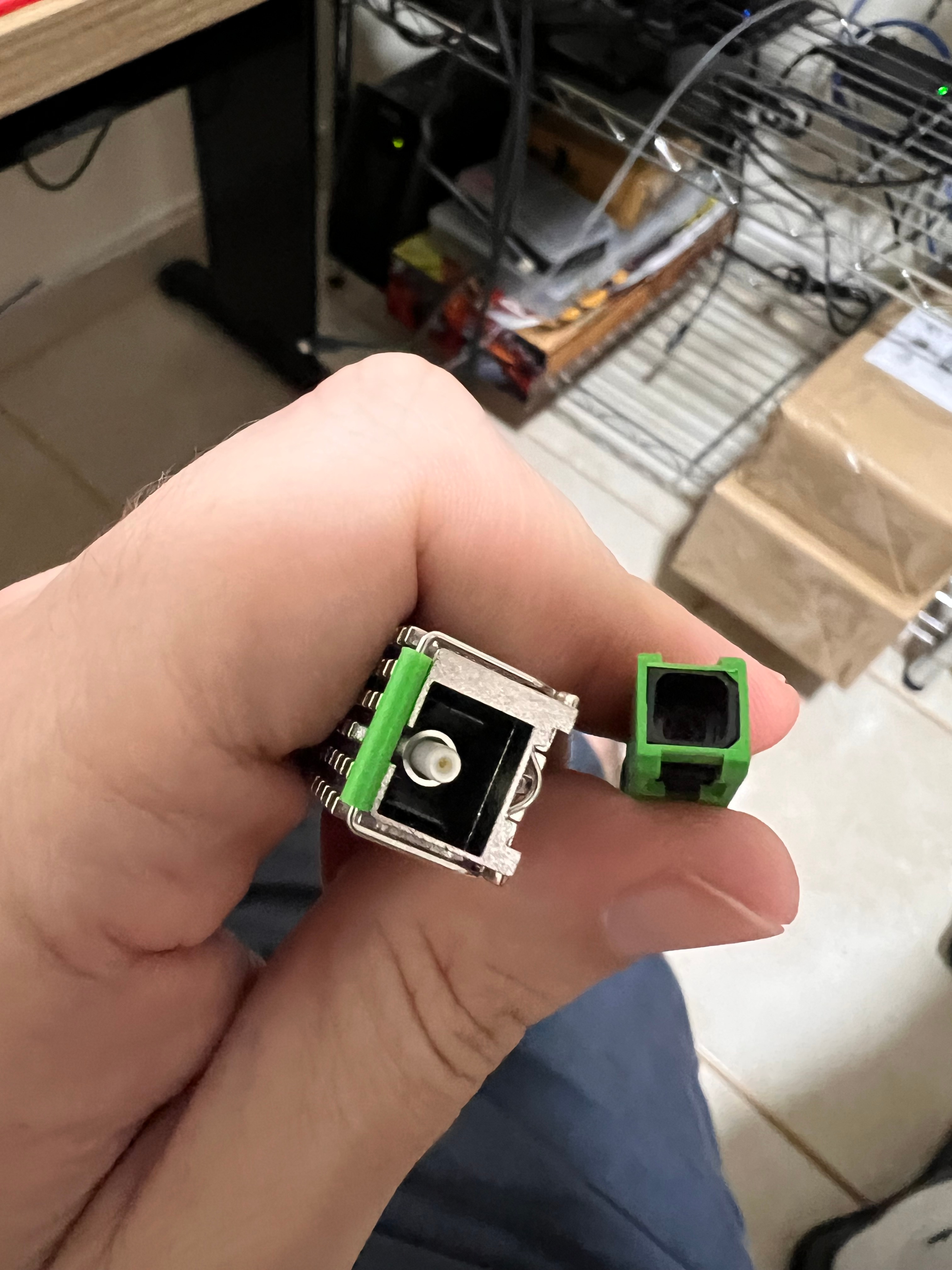
Simple problem, simple solution — or so I thought.
The setup
A quick context before diving into the saga: instead of using the standard HGU provided by my ISP, I use a GBIC module connected directly to the RouterBOARD, cloning the original equipment’s information. This approach gives me much more control over the network, superior stability, and proper IPv6 support — something generic ISP-provided HGUs in Brazil still struggle with.
Five connectors, zero results
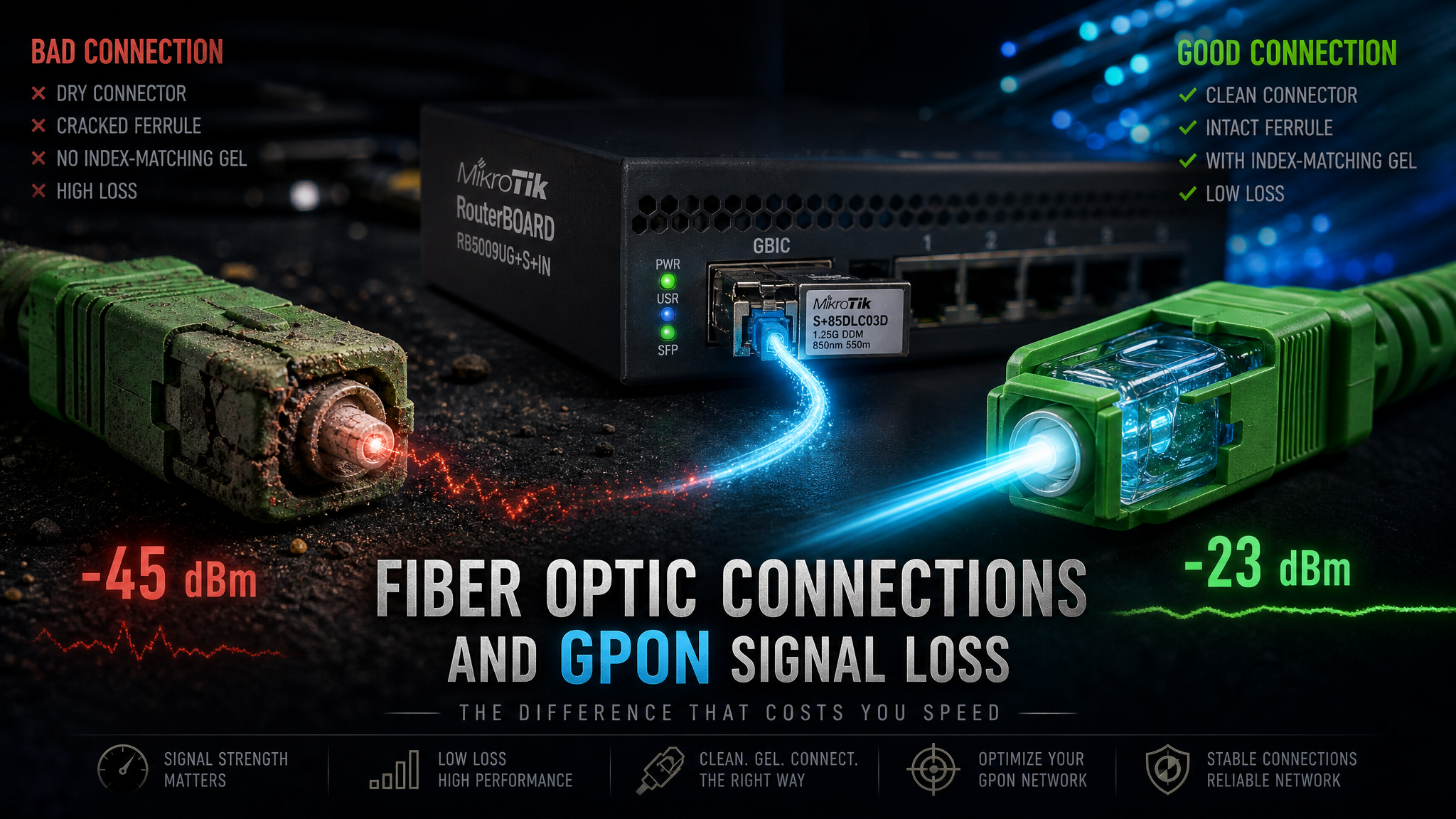
I had on hand a box of SC/UPC field connectors from the brand Transcend, purchased about two years ago and stored since then. The termination process is straightforward: strip the coating, cleave the fiber, insert into the connector, and crimp. I did this five times. Result: signal between -35 and -50 dBm, completely outside the acceptable range for a GPON network that requires between -8 and -27 dBm.
I rotated the cleaver blade disk to another position. Cleaned everything. Re-read the procedure. Nothing changed.
The diagnosis
With an optical power meter, I ran the most important test: measured the signal on the bare fiber, without any connector. Result: -23 dBm — exactly the signal I had before the break. The fiber was perfect. The problem was exclusively the connector.
That’s when I noticed something I should have caught earlier: the inside of the ferrule was dry. No viscous material whatsoever. In field connectors, there is an index matching gel that fills the space between the fiber and the ferrule, eliminating reflections and optical losses. In these connectors, the gel had dried out — degraded over the two years they had been stored.
The memory flash
At that moment I remembered something: two years ago, while assembling a point-to-point link, the fiber came out coated in a sticky substance after termination. At the time I thought it was odd, cleaned it off, and moved on. Now I understood what that “gunk” was — it was the index matching gel in perfect condition, with the right consistency and viscosity. The connectors that had been stored no longer had any of it.
The gel degraded during storage. Not on the store shelf — on my own workbench, over two years.
Why does nobody talk about this?
I researched extensively and found virtually zero documentation on gel degradation in field connectors. Technical forums simply say “bad connector, replace it” without explaining why. This happens for a few reasons:
- Field technicians simply discard and replace without investigating
- Manufacturers have no interest in documenting their own product failures
- Without an optical microscope and power meter, the diagnosis is nearly impossible
- The problem is frequently blamed on installer error
The reality is that the gel is an unstable organic component. Even inside sealed connectors, it degrades over time — and the rate of degradation varies with storage temperature, seal quality, and manufacturing batch. A single box can have both good and bad connectors from the same lot, depending on minimal variations in the sealing process.
The solution
I bought 2Flex connectors in a 10-unit pack. Result on the first attempt:
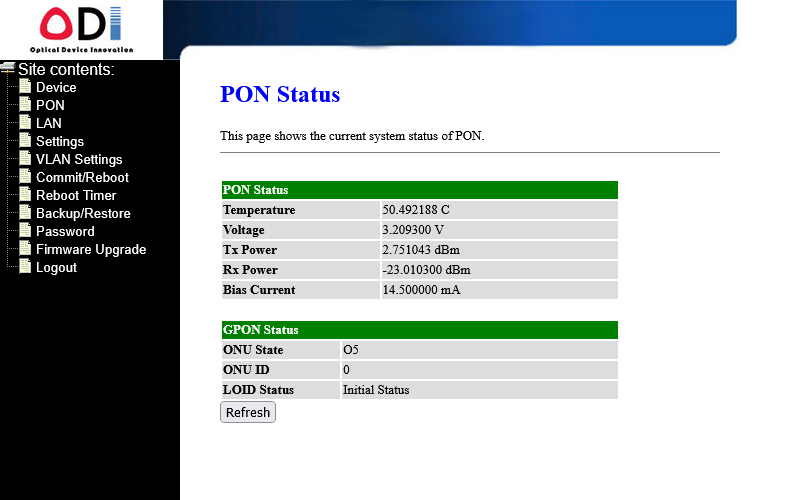
- Rx Power: -23.01 dBm ✓
- Tx Power: 2.75 dBm ✓
- All other parameters within nominal range
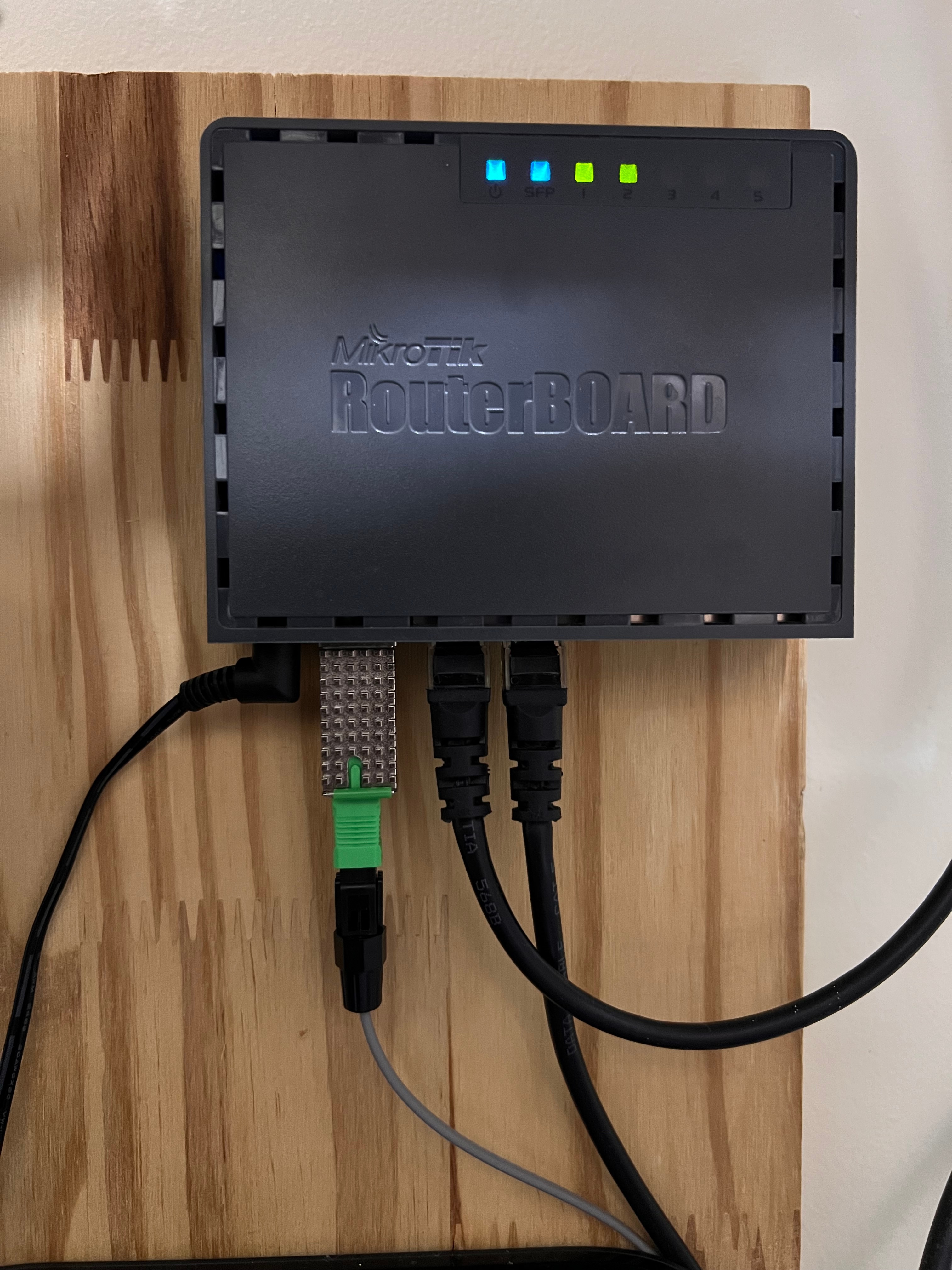
Signal identical to what I had before the break. RouterBOARD fixed in its new location, everything working.
Key takeaways
- Inspect the gel when opening a connector. It should be viscous and present. If it’s dry or absent, discard it.
- Measure the bare fiber before blaming the cleaver or your technique. If the bare fiber signal is good, the problem is the connector.
- Don’t buy in excess. The gel has a shelf life. A 6-month stock is enough.
- Store in a cool, dry place, away from temperature fluctuations.
- Connectors stored for more than a year deserve inspection before use — regardless of brand.
Fiber optics is an extremely reliable technology — when the components are quality and in good condition. The weakest link tends to be exactly the point we handle the most: the connector.